A cold front leaves behind clear skies, cold dry air, hard light and a fast rise in pressure. Fish respond by holding tight to cover, dropping deeper, and shrinking their strike zone rather than by leaving. Expect 24 to 72 hours of slow fishing and fix it with slower presentations, smaller baits, more accurate casting into cover, and a shift to the middle of the day.
Every angler knows the day. The front came through overnight, the morning is beautiful, the sky is that hard scrubbed blue, and the water is dead. It is the most predictable bad day in fishing, which at least means you can plan around it.
What a cold front leaves behind
A cold front is a boundary where a cold dense air mass shoves under a warmer one. The front itself brings the wind, cloud and rain. What matters for fishing is what follows it, usually within twelve hours:
- Pressure rises sharply. Often 5 to 15 hPa in under a day. This is the largest and fastest pressure change most waters experience.
- Cloud clears completely. Post-frontal air is dry and stable, which produces the characteristic cloudless "bluebird" sky.
- Light penetration jumps. No cloud plus a wind that has usually dropped means a flat, brilliantly lit water column.
- Surface temperature falls. Cold air plus clear nights means strong radiative cooling. A shallow lake can lose 3 to 5 C in 48 hours.
- The wind swings. Typically round to the north or northwest in the northern hemisphere, and it often stays up for a day.
Why the fish go quiet
There is no single cause, which is why the effect is so consistent. Four things all point the same way at once.
Light. This is probably the biggest one and the most underrated. A predator that has been hunting in colored, wind-broken water suddenly finds itself in a brightly lit fish tank. It responds by moving under something, and it stops chasing prey across open water where it is exposed.
Temperature drop. A fast fall of several degrees drops metabolic rate and, more importantly, gives no time to adjust. As covered in the water temperature chart, fish handle a slow seasonal change far better than a fast one.
Pressure change. Real but modest. Closed-bladder species such as bass, perch and walleye need hours to re-equalise after a fast change, which is a plausible reason they hold at one depth rather than moving up and down the column.
Prey behavior. Baitfish and invertebrates react to the same light and temperature shift. If the food has gone into cover or gone deep, the predator follows regardless of how it feels.
How long it lasts
As a working rule:
- Day one: hardest. The change is fresh and nothing has settled.
- Day two: improving, especially in the afternoon once the sun has put some warmth back into the shallows.
- Day three: usually back to normal, and if the high has settled in you are now in the stable high-pressure conditions that fish well.
Shallow, small waters recover fastest because they reheat quickly. Deep lakes and large reservoirs take longer to recover but were also hit less hard in the first place. Rivers are the least affected of all: flowing water mixes constantly and the fish are used to changeable conditions.
The four adjustments
Fish do not leave the lake after a front. They contract. Everything below is about getting a bait into a smaller strike zone and giving the fish longer to commit.
1. Fish the middle of the day, not dawn. This inverts the usual advice and it is the single most useful change. The coldest water of the whole cycle is at dawn on the morning after. By early afternoon the sun has put a degree back into the shallows and the shallow-water bite often switches on for a couple of hours.
2. Go tighter to cover, not just deeper. "Fish go deep after a front" is only half of it. In shallow lakes with no depth to go to, fish bury into the thickest cover available: weed, timber, docks, undercut banks. The strike zone can shrink to under a meter. That means accurate casting matters far more than water covered, and a bait that lands two meters from a fish may as well be in the car park.
3. Slow everything down and downsize. A reaction bite needs a fish willing to chase. After a front, most are not. Longer pauses, smaller profiles, more subtle presentations. Finesse tactics exist largely for these conditions. If you normally use a 10 cm lure, try 6 cm.
4. Use what light there is against them. Clear water and bright sun means longer casts, lighter line, natural colors and staying off the skyline. The one advantage of a post-frontal day is that you can see structure you normally cannot, so use it to find the cover worth fishing carefully.
The other half: fish the front instead
The better plan, if you have the flexibility, is to fish the twelve to eighteen hours before the front. Falling pressure, building cloud, rising wind and a stable water temperature is one of the most reliable good windows in fishing. The fish are, in a real sense, feeding ahead of the weather.
If you can only fish one day around a front, take the day before, take the day after in second place, and give the bluebird morning a miss.
Common questions
How long after a cold front will fish start biting again?
Usually 24 to 72 hours. Shallow waters recover on the faster end because they reheat quickly; deep lakes take longer but are less affected to begin with. Rivers often show barely any effect at all.
Why do fish stop biting after a cold front?
Four things happen at once: light penetration jumps because the cloud clears, surface temperature drops several degrees, pressure rises sharply, and the prey species react by going into cover. The fish do not leave, they contract into cover and their strike zone shrinks.
Is fishing better before or after a cold front?
Before, clearly. The falling-pressure window ahead of the front, with building cloud and rising wind, is one of the best short windows there is. The period after the front clears is the hardest fishing of the cycle.
What should I use after a cold front?
Smaller, slower, more accurate. Downsize the profile, lengthen the pauses, use natural colors in the clear water, and put the bait right into cover rather than covering water. Finesse presentations were largely developed for exactly these conditions.
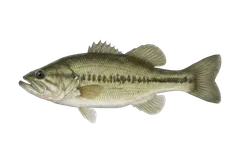 Largemouth bass
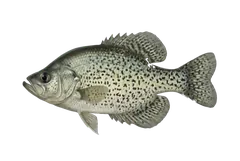 Crappie
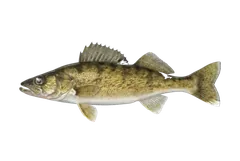 Walleye
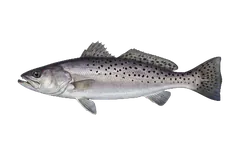 Speckled trout