- Best water temperature
- 70°F21°C
- Active range
- 57 to 82°F14 to 28°C
- Feeds most
- Dawn and duskLow light
- Typical size
- 18 in45 cm
- Big ones reach
- 35 in24 lb
- Water
- FreshwaterLow-light bottom hunter
Walleye feed hardest in water around 70°F (21°C) and stay active from about 57 to 82°F. They feed hardest in low light, around dawn and dusk, with a lull in the middle of a bright day. Start with a medium minnow (3 to 4 in), a whole leech, a curly-tail grub in smoke pepper.
The walleye is the prize of northern lakes and rivers, from the Great Lakes to the Dakotas and Canada: a schooling predator with eyes built for dim light and a reputation as the best-eating freshwater fish.
Walleye water temperature
Walleye feed best at 70°F (21°C), active from about 57 to 82°F (14 to 28°C). That band comes from the same species model BiteCast scores with, and it is why the Fish Score for walleye rises and falls with the water rather than the air.
Walleye spawn in early spring, often right after ice-out, when rivers and rocky shoals reach the low to mid 40s°F. Feeding builds as the water warms, peaks around 70°F, and stays strong from the upper 50s into the low 80s. In summer heat they drop to deeper, cooler water off structure.
For a side-by-side view of every species, see the full water temperature table or the guide to reading water temperature.
When walleye bite
Walleye are the classic low-light fish. Their eyes gather light that their prey cannot use, so dusk, dawn and the first hours of darkness are prime. A "walleye chop," a wind that ripples the surface and cuts the light, keeps them feeding through the day, and so does stained water.
Where to find walleye
Large lakes and rivers; feeds near the bottom, most active in low light and stained water.
Rocky points, reefs, gravel bars and weed edges that drop to deep water, and mud flats in summer where they feed on insect hatches and baitfish. In rivers they hold in current breaks below dams and at the heads of deep holes. They move shallow at night.
Best baits and lures for walleye
Ranked from BiteCast's bait data, with the colors to throw as the water gets dirtier. Natural baits show how to rig them instead of a color.
| # | Bait | Clear water | Stained | Muddy |
|---|---|---|---|---|
| 1 | Live MinnowNatural bait | Rig: Medium minnow (3 to 4 in) | ||
| 2 | LeechNatural bait | Rig: Whole leech | ||
| 3 | Curly-Tail GrubSoft plastic | Smoke Pepper, Pearl White, Clear Silver Flake | Chartreuse, Yellow, Electric Blue | High-Vis Chartreuse, Solid White, Solid Black |
| 4 | Suspending JerkbaitHard bait | Pro Blue, Ghost Minnow, Tennessee Shad | Clown, Gold/Black, Table Rock Shad | Firetiger, Chartreuse Shad, Matte Bone |
| 5 | Deep-Diving CrankbaitHard bait | Pro Blue, Natural Shad, Bluegill | Chartreuse/Blue, Red Craw, Gold/Black | Firetiger, Pink Lemonade, High-Vis Chartreuse |
| 6 | Tube JigSoft plastic | Goby Tan, Green Pumpkin, Pearl White | Pumpkinseed/Gold Flake, Smoke Red | Black & Blue, Solid White, High-Vis Glow/Chartreuse |
| 7 | Plastic WormSoft plastic | Green Pumpkin, Watermelon Seed, Smoke Purple | Junebug, Pumpkinseed, Cinnamon | Black & Blue, Solid Black, Red Shad |
| 8 | Trolling PlugHard bait | Purple Haze, Wonderbread, Silver/Blue | ||
A jig tipped with a minnow is the most reliable walleye bait there is. In summer, a leech or a nightcrawler harness trolled along an edge is hard to beat. At dusk, cast or troll shallow-running crankbaits and jerkbaits over rock. Walleye are light biters: set the hook at any change in weight.
What walleye eat
In the wild walleye eat yellow perch, juvenile baitfish, shad, minnows, crayfish, aquatic insects. Matching the size and color of that forage is the single most reliable way to pick a bait.
About the walleye
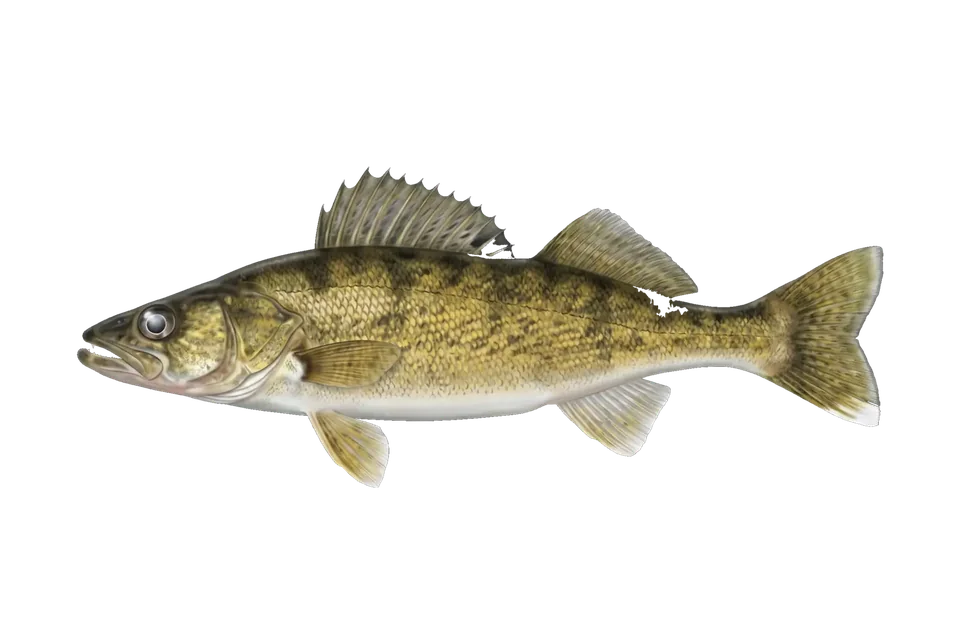
A freshwater perch relative identified by olive-gold flanks, a white-tipped lower tail lobe, and large reflective eyes adapted for low-light vision.
Native to lakes and large rivers across central and northern North America, favouring cool, deep, turbid waters with structure.
It is a low-light predator that feeds most actively at dawn, dusk, and night, retreating to deeper water under bright sun.
It typically runs 1 to 3 pounds, with the rod-and-reel record near 25 pounds, and is sought hard during the spring spawning run.
Found in: United States, Canada.
Common questions
What water temperature do walleye bite best in?
Walleye feed hardest around 70°F (21°C) and stay active from about 57 to 82°F (14 to 28°C). Below the band they slow down and feed less often; above it, warm water holds less oxygen and they go deeper or feed at night.
What time of day do walleye bite?
Walleye feed hardest in low light, around dawn and dusk, with a lull in the middle of a bright day. Cloud cover, stained water and wind chop stretch the low-light window through more of the day.
What is the best bait for walleye?
In BiteCast's bait rankings the top picks for walleye are live minnow, leech, curly-tail grub.