- Best water temperature
- 81°F27°C
- Active range
- 70 to 91°F21 to 33°C
- Feeds most
- Dawn and duskLow light
- Typical size
- 16 in40 cm
- Big ones reach
- 30 in22 lb
- Water
- FreshwaterMid-water roamer
Largemouth bass feed hardest in water around 81°F (27°C) and stay active from about 70 to 91°F. They feed hardest in low light, around dawn and dusk, with a lull in the middle of a bright day. Start with a plastic worm in green pumpkin, a soft stickbait in green pumpkin, a skirted jig in green pumpkin.
The largemouth bass is the most targeted gamefish in America: an ambush predator that lives in almost every pond, lake, reservoir and slow river from Florida to the Canadian border. It is not hard to find. It is hard to predict, because its mood follows water temperature and light more closely than almost any other fish.
Largemouth bass water temperature
Largemouth bass feed best at 81°F (27°C), active from about 70 to 91°F (21 to 33°C). That band comes from the same species model BiteCast scores with, and it is why the Fish Score for largemouth bass rises and falls with the water rather than the air.
Below the mid 50s°F largemouth feed rarely and move slowly, so small baits worked slowly near deep cover are the play. As the shallows climb through the 50s in spring they move up to feed before the spawn, and they spawn when the water reaches the low to mid 60s°F. The best feeding of the year comes between the upper 60s and mid 80s. Past about 90°F the shallows run short of oxygen and bigger fish slide to shade, deeper edges and the night.
For a side-by-side view of every species, see the full water temperature table or the guide to reading water temperature.
When largemouth bass bite
The first and last hour of light are the most reliable windows all year, and in summer they are most of the bite. Overcast skies, wind on the water and stained water all stretch the low-light window into the day. A falling barometer ahead of a front often sets off the best feeding of the week; the bright, high-pressure day after it is usually the toughest.
Where to find largemouth bass
Weed edges, docks, submerged timber and other cover in warm lakes and slow rivers.
Largemouth hold on the edge of something: a weed line, a dock, a fallen tree, a rock point or the drop from a flat into deeper water. In spring look to protected, shallow northern coves that warm first. In summer fish shade and heavy cover at midday and the flats at dawn and dusk. In fall they follow shad into the backs of creeks.
Best baits and lures for largemouth bass
Ranked from BiteCast's bait data, with the colors to throw as the water gets dirtier. Natural baits show how to rig them instead of a color.
| # | Bait | Clear water | Stained | Muddy |
|---|---|---|---|---|
| 1 | Plastic WormSoft plastic | Green Pumpkin, Watermelon Seed, Smoke Purple | Junebug, Pumpkinseed, Cinnamon | Black & Blue, Solid Black, Red Shad |
| 2 | Soft StickbaitSoft plastic | Green Pumpkin, Watermelon Seed, Natural Blue | Junebug, Cinnamon Brown, Smoke Blue Flake | Black & Blue, Bubblegum Pink, Solid Black |
| 3 | Skirted JigSoft plastic | Green Pumpkin, Watermelon Red, Peanut Butter & Jelly | Black & Blue, Green Pumpkin Orange, Red Craw | Black & Blue, Solid Black, Chartreuse/Black |
| 4 | Paddle-Tail SwimbaitSoft plastic | Shad, Pearl White, Ayu | Chartreuse, Electric Chicken, Sexy Shad | White/Chartreuse, Solid Black, Hot Pink |
| 5 | SpinnerbaitMetal and blades | White Skirt with Silver Blades | White/Chartreuse, White/Chartreuse Skirt with Gold/Silver Blades | Black & Blue Skirt with Gold Blade, Firetiger |
| 6 | Live MinnowNatural bait | Rig: Large baitfish (5+ in) | ||
| 7 | Squarebill CrankbaitHard bait | Sexy Shad, Ghost Craw, Green Pumpkin Craw | Chartreuse/Black, Citrus Shad | Red Craw, Firetiger, Chartreuse/Blue |
| 8 | Hollow-Body FrogHard bait | Green Frog, Natural Green Frog, Yellow/White Belly | Chartreuse Frog, Orange Belly | Solid Black, Dark Brown, Purple |
A Texas-rigged worm or a jig dragged through cover catches bass in every season. Speed up with moving baits (spinnerbaits, swimbaits, squarebill crankbaits) when the water is warm and the fish are chasing, and slow right down when it is cold. Match color to clarity: natural greens and browns in clear water, black and blue or chartreuse when it is dirty.
What largemouth bass eat
In the wild largemouth bass eat small baitfish such as shad and shiners, crayfish, frogs, juvenile sunfish, aquatic insects, small crustaceans. Matching the size and color of that forage is the single most reliable way to pick a bait.
About the largemouth bass
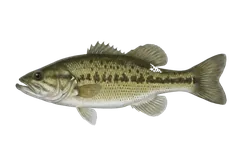
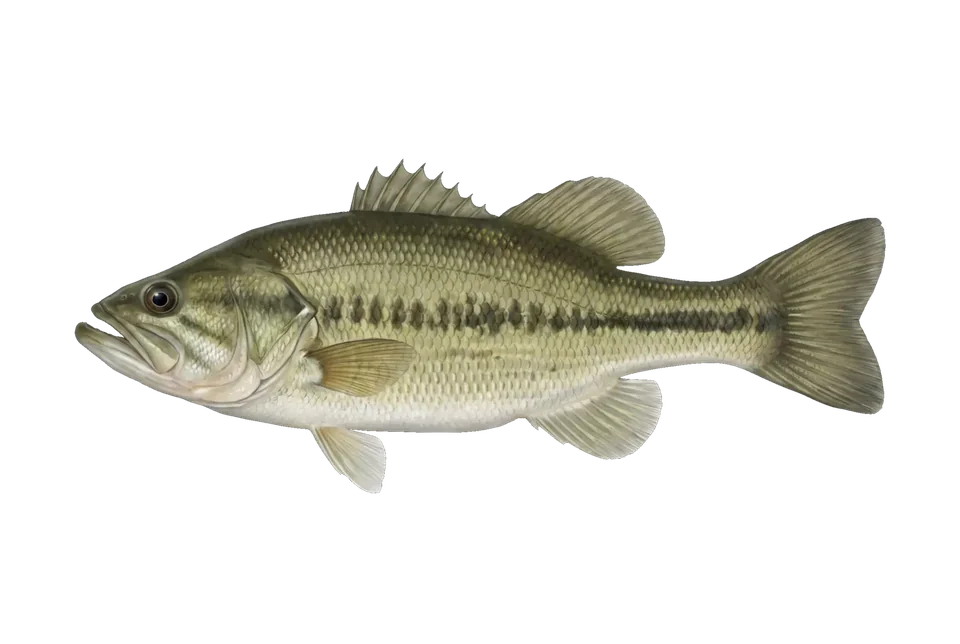
The largemouth bass is an olive-green freshwater sunfish with a dark lateral stripe and a jaw that extends past the rear edge of the eye.
Native to eastern and central North America, it is now widely introduced worldwide and favors warm, weedy lakes, ponds, and slow rivers with cover.
It is an ambush predator that hides near structure such as weeds, logs, and docks, then strikes prey with a rapid lunge.
It feeds most actively in low light and warm water, fights with hard runs and jumps, and the all-tackle record is about 22 pounds 4 ounces.
Found in: United States, Brazil, Canada, Switzerland, China, Colombia, Cyprus, Spain, France, Italy, Japan, South Korea, Mexico, Norway, Portugal, South Africa, Zimbabwe.
Common questions
What water temperature do largemouth bass bite best in?
Largemouth bass feed hardest around 81°F (27°C) and stay active from about 70 to 91°F (21 to 33°C). Below the band they slow down and feed less often; above it, warm water holds less oxygen and they go deeper or feed at night.
What time of day do largemouth bass bite?
Largemouth bass feed hardest in low light, around dawn and dusk, with a lull in the middle of a bright day. Cloud cover, stained water and wind chop stretch the low-light window through more of the day.
What is the best bait for largemouth bass?
In BiteCast's bait rankings the top picks for largemouth bass are plastic worm, soft stickbait, skirted jig. In clear water go natural (green pumpkin, watermelon seed); in muddy water go dark or bright (black & blue, solid black).