- Best water temperature
- 70°F21°C
- Active range
- 59 to 79°F15 to 26°C
- Feeds most
- Dawn and duskLow light
- Typical size
- 10 in25 cm
- Big ones reach
- 19 in6 lb
- Water
- FreshwaterSuspended schooler
This guide covers the black crappie (Pomoxis nigromaculatus) and the white crappie (Pomoxis annularis). Figures are for the black crappie unless stated.
Crappie feed hardest in water around 70°F (21°C) and stay active from about 59 to 79°F. They feed hardest in low light, around dawn and dusk, with a lull in the middle of a bright day. Start with a small minnow (1 to 2 in), a curly-tail grub in smoke pepper, a tube jig in pearl white.
Crappie are the most popular panfish in America after bluegill: schooling, good to eat, and catchable in almost every warmwater lake. There are two species, the black crappie and the white crappie, and they behave closely enough that one playbook covers both.
Crappie water temperature
Crappie feed best at 70°F (21°C), active from about 59 to 79°F (15 to 26°C). That band comes from the same species model BiteCast scores with, and it is why the Fish Score for crappie rises and falls with the water rather than the air.
Crappie move shallow as the water warms through the 50s°F in spring and spawn when it reaches the low 60s. Feeding is best around 70°F. In summer heat they suspend over deeper water near brush and structure, and in winter they gather in tight schools on deep channel edges.
For a side-by-side view of every species, see the full water temperature table or the guide to reading water temperature.
When crappie bite
Crappie are low-light feeders. Dawn and dusk are prime, and on summer nights they gather under lights on docks and bridges to feed on baitfish drawn to the glow. Cloudy days keep them active longer.
Where to find crappie
Lakes and reservoirs; suspends around brush piles and submerged timber.
In spring, look to shallow brush, stumps, reeds and docks in protected coves. In summer and winter, find brush piles, bridge pilings, standing timber and channel edges in 10 to 30 feet of water, usually suspended rather than on the bottom. Black crappie favor clearer, weedier water; white crappie handle murky water better.
Best baits and lures for crappie
Ranked from BiteCast's bait data, with the colors to throw as the water gets dirtier. Natural baits show how to rig them instead of a color.
| # | Bait | Clear water | Stained | Muddy |
|---|---|---|---|---|
| 1 | Live MinnowNatural bait | Rig: Small minnow (1 to 2 in) | ||
| 2 | Curly-Tail GrubSoft plastic | Smoke Pepper, Pearl White, Clear Silver Flake | Chartreuse, Yellow, Electric Blue | High-Vis Chartreuse, Solid White, Solid Black |
| 3 | Tube JigSoft plastic | Pearl White, Green Pumpkin, Goby Tan | Pumpkinseed/Gold Flake, Smoke Red | Black & Blue, Solid White, High-Vis Glow/Chartreuse |
| 4 | Hair JigMetal and blades | White, Pure White, White/Silver | Yellow/Chartreuse, Pink/White, White/Red Head | Solid Black, Dark Purple, High-Vis Chartreuse |
| 5 | Plastic WormSoft plastic | Green Pumpkin, Watermelon Seed, Smoke Purple | Junebug, Pumpkinseed, Cinnamon | Black & Blue, Solid Black, Red Shad |
| 6 | EarthwormNatural bait | Rig: Small piece | ||
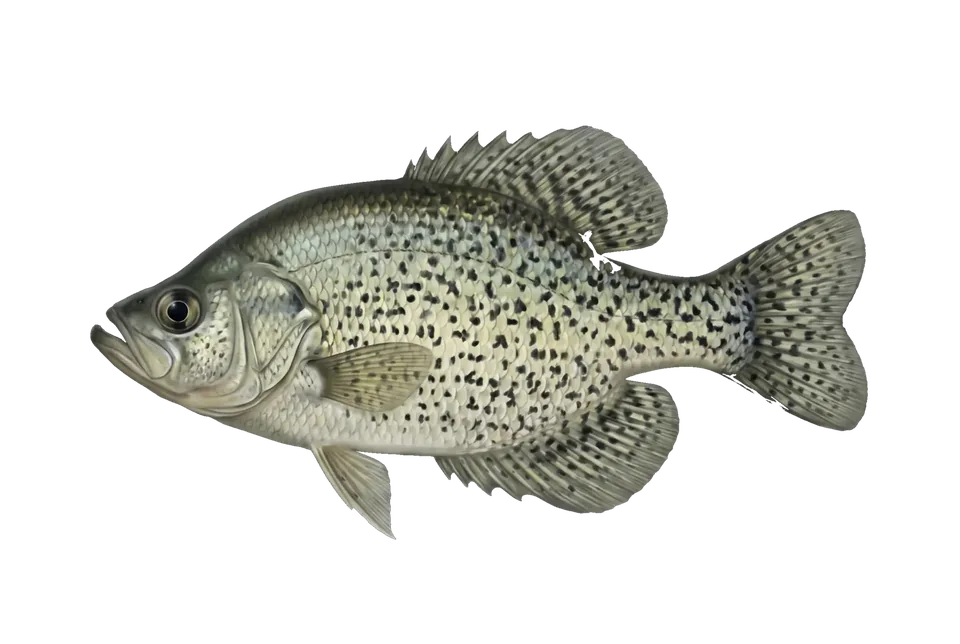
A live minnow under a slip bobber and a small jig are all you need. Set the depth just above the fish, because crappie feed upward. Fish slowly in cold water. To tell them apart, count the spines on the back fin: black crappie usually have seven or eight, white crappie five or six.
What crappie eat
In the wild crappie eat small minnows, juvenile baitfish, aquatic insect larvae, zooplankton, freshwater shrimp, small crustaceans. Matching the size and color of that forage is the single most reliable way to pick a bait.
About the black crappie
A deep-bodied silvery panfish identified by irregular dark speckling scattered across the body and seven or eight dorsal spines.
Native to eastern and central North America, it favours clear, vegetated lakes, ponds, and slow river backwaters with submerged cover.
It forms loose schools and feeds most actively at dawn and dusk, suspending near brush, weed edges, and standing timber.
Spring spawning in shallow water offers the strongest fishing, with typical fish under 0.5 kg and the rod-and-reel record near 2.5 kg.
Found in: United States, Canada.
Common questions
What water temperature do crappie bite best in?
Crappie feed hardest around 70°F (21°C) and stay active from about 59 to 79°F (15 to 26°C). Below the band they slow down and feed less often; above it, warm water holds less oxygen and they go deeper or feed at night.
What time of day do crappie bite?
Crappie feed hardest in low light, around dawn and dusk, with a lull in the middle of a bright day. Cloud cover, stained water and wind chop stretch the low-light window through more of the day.
What is the best bait for crappie?
In BiteCast's bait rankings the top picks for crappie are live minnow, curly-tail grub, tube jig.