- Best water temperature
- 82°F28°C
- Active range
- 72 to 93°F22 to 34°C
- Feeds most
- Daytime
- Typical size
- 7 in18 cm
- Big ones reach
- 12 in4.4 lb
- Water
- FreshwaterShallow nest feeder
Bluegill feed hardest in water around 82°F (28°C) and stay active from about 72 to 93°F. They are daytime feeders: activity builds through the morning and holds through the brighter hours. Start with an earthworm (cut section), a whole cricket, sweetcorn (single kernel).
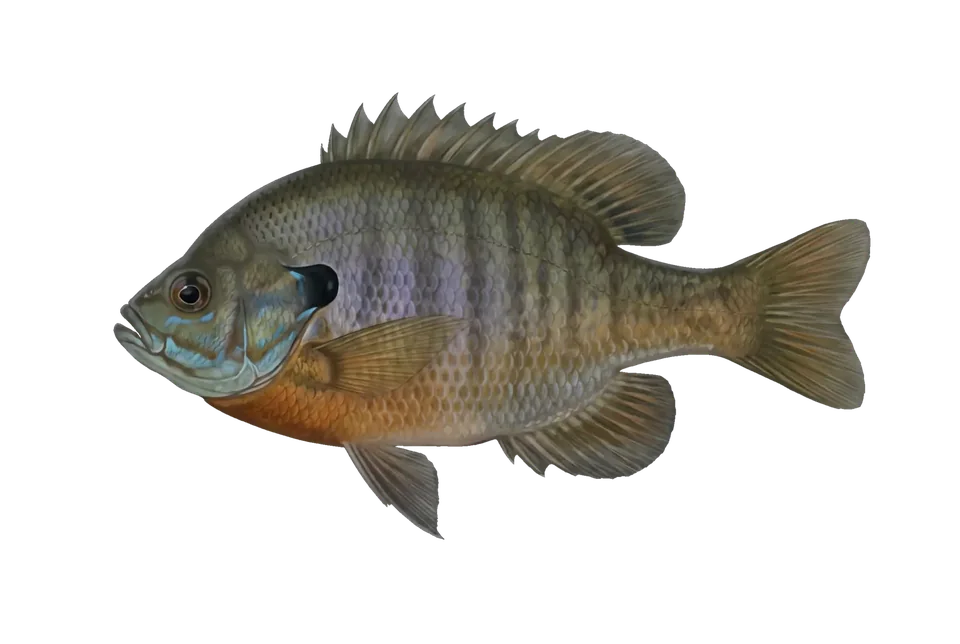
The bluegill is the fish most Americans catch first: a hand-sized sunfish in nearly every pond, lake and slow river. It is easy to catch and good to eat, and a big one on light tackle is a real fight.
Bluegill water temperature
Bluegill feed best at 82°F (28°C), active from about 72 to 93°F (22 to 34°C). That band comes from the same species model BiteCast scores with, and it is why the Fish Score for bluegill rises and falls with the water rather than the air.
Bluegill are warmwater fish. They spawn in late spring and early summer once the shallows reach the low 70s, and they keep spawning in waves through the summer.
For a side-by-side view of every species, see the full water temperature table or the guide to reading water temperature.
When bluegill bite
Unlike bass, bluegill are daytime feeders: activity builds through the morning and holds through the afternoon. That makes them the reliable midday target when other fish have gone quiet.
Where to find bluegill
Warm ponds and lake margins near cover; spawns in shallow beds.
In spring and early summer look for colonies of round, pale beds in shallow, sandy or gravel bottoms near weeds. Through the summer, smaller fish stay shallow around weeds and docks while the bigger ones hold on the deeper weed edge and around brush.
Best baits and lures for bluegill
Ranked from BiteCast's bait data, with the colors to throw as the water gets dirtier. Natural baits show how to rig them instead of a color.
| # | Bait | Clear water | Stained | Muddy |
|---|---|---|---|---|
| 1 | EarthwormNatural bait | Rig: Cut section | ||
| 2 | CricketNatural bait | Rig: Whole cricket | ||
| 3 | SweetcornNatural bait | Rig: Single kernel | ||
| 4 | Inline SpinnerMetal and blades | Gold, Silver Blade/Black Body, Gold Blade/Brown Body | Gold Blade/Orange Body, Silver Blade/Red Tail, Rainbow Trout | Fluorescent Chartreuse, Hot Pink, Firetiger |
| 5 | Paste BaitNatural bait | Rig: Dough ball | ||
A piece of worm or a cricket on a small hook under a bobber is the classic, and it works. Use a small hook (size 8 or 10) because bluegill have small mouths. Small inline spinners and tiny jigs catch the bigger, more aggressive fish.
What bluegill eat
In the wild bluegill eat aquatic insect larvae, small crustaceans, zooplankton, snails, fish eggs, small minnows. Matching the size and color of that forage is the single most reliable way to pick a bait.
About the bluegill
A small deep-bodied sunfish identified by a solid black gill-cover flap (no pale margin) and a dark blotch on the rear of the soft dorsal fin.
Native to eastern and central North America and now widely introduced, it favours warm, weedy ponds, lakes, and slow river backwaters with cover.
It feeds throughout the day on small invertebrates, often in loose schools, and males fan circular nests in colonies during late spring spawning.
A popular panfish that fights hard for its size on light tackle; large fish exceed 10 inches and the world record is 4 pounds 12 ounces.
Found in: United States, Canada, China, Japan, South Korea, Mexico, Puerto Rico, South Africa.
Common questions
What water temperature do bluegill bite best in?
Bluegill feed hardest around 82°F (28°C) and stay active from about 72 to 93°F (22 to 34°C). Below the band they slow down and feed less often; above it, warm water holds less oxygen and they go deeper or feed at night.
What time of day do bluegill bite?
Bluegill are daytime feeders: activity builds through the morning and holds through the brighter hours. Cloud cover, stained water and wind chop stretch the low-light window through more of the day.
What is the best bait for bluegill?
In BiteCast's bait rankings the top picks for bluegill are earthworm, cricket, sweetcorn.