- Best water temperature
- 57°F14°C
- Active range
- 46 to 64°F8 to 18°C
- Feeds most
- Dawn and duskLow light
- Typical size
- 11 in28 cm
- Big ones reach
- 26 in14 lb
- Water
- FreshwaterHeadwater dweller
Brook trout feed hardest in water around 57°F (14°C) and stay active from about 46 to 64°F. They feed hardest in low light, around dawn and dusk, with a lull in the middle of a bright day. Start with an earthworm (cut section), an inline spinner in gold, a casting spoon in silver/blue.
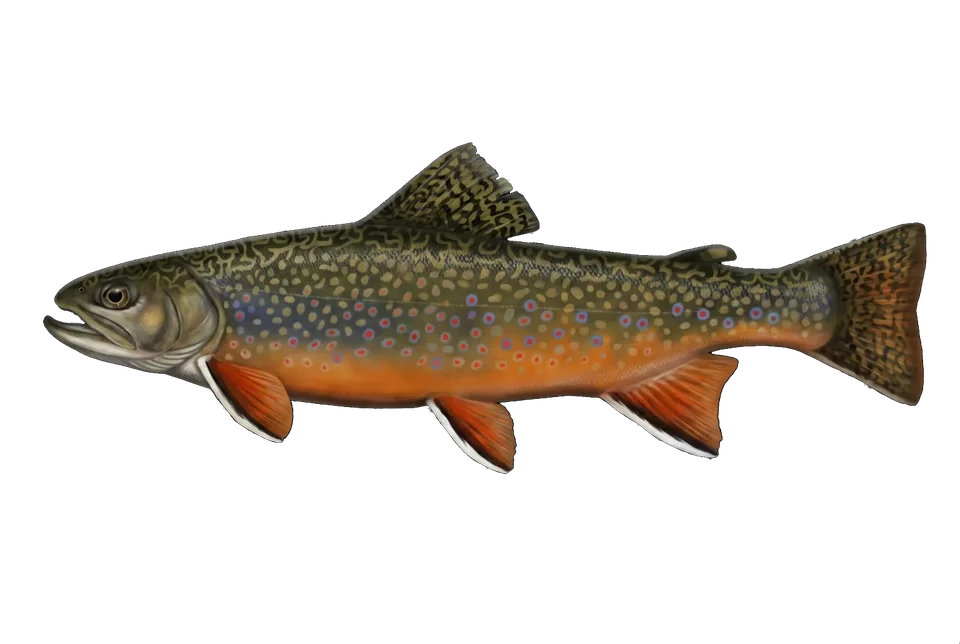
The brook trout, or brookie, is the native char of eastern North America: a small, brilliantly colored fish of cold headwater streams, spring-fed ponds and northern lakes. It needs the coldest, cleanest water of any common trout.
Brook trout water temperature
Brook trout feed best at 57°F (14°C), active from about 46 to 64°F (8 to 18°C). That band comes from the same species model BiteCast scores with, and it is why the Fish Score for brook trout rises and falls with the water rather than the air.
Warm water pushes brookies out of streams fast, so in summer they crowd into spring seeps, shaded pools and the upper reaches of creeks.
For a side-by-side view of every species, see the full water temperature table or the guide to reading water temperature.
When brook trout bite
Low light at dawn and dusk, and overcast days. In small streams they feed eagerly through the day when the water is cold.
Where to find brook trout
Cold, clean headwater streams and northern lakes.
Small, shaded, spring-fed streams in the mountains and the north woods, beaver ponds, and cold lakes in Canada and the northern states. In streams, any pocket of deeper water behind a rock or under a bank can hold one.
Best baits and lures for brook trout
Ranked from BiteCast's bait data, with the colors to throw as the water gets dirtier. Natural baits show how to rig them instead of a color.
| # | Bait | Clear water | Stained | Muddy |
|---|---|---|---|---|
| 1 | EarthwormNatural bait | Rig: Cut section | ||
| 2 | Inline SpinnerMetal and blades | Gold, Silver Blade/Black Body, Gold Blade/Brown Body | Gold Blade/Orange Body, Silver Blade/Red Tail, Rainbow Trout | Fluorescent Chartreuse, Hot Pink, Firetiger |
| 3 | Casting SpoonMetal and blades | Silver/Blue, Chrome/Silver, Brass/Gold | Red & White, Blue/Silver, Yellow/Black | Fluorescent Pink, Chartreuse/Gold, Firetiger |
| 4 | Soft Jerk ShadSoft plastic | Pearl White, Arkansas Shad, Smelt | Pink/Silver, Houdini, Baby Bass | Chartreuse, White/Red Head, Solid Black |
Small inline spinners, worms and flies on light line. Brookies are rarely picky, but they spook easily in small, clear water, so stay back and cast upstream.
What brook trout eat
In the wild brook trout eat aquatic insect larvae, adult flying insects, freshwater shrimp, juvenile baitfish, small crayfish, worms. Matching the size and color of that forage is the single most reliable way to pick a bait.
About the brook trout
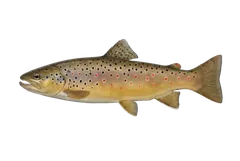
A char, not a true trout, identified by dark olive backs with pale worm-like vermiculation, red spots ringed with blue haloes, and white-edged lower fins.
Native to eastern North America, it occupies cold, clean, well-oxygenated headwater streams, spring-fed creeks, ponds, and lakes, requiring water below about 20 degrees Celsius.
It is an opportunistic sight feeder that takes drifting insects, smaller fish, and almost any prey passing through its lie, feeding most actively in cool conditions.
Most stream fish weigh under half a kilogram, though the all-tackle record is a 6.57 kilogram fish caught in Ontario in 1915; they spawn in autumn over gravel.
Found in: United States, Argentina, Austria, Bosnia & Herzegovina, Belgium, Canada, Switzerland, Czechia, Germany, Denmark, Spain, Finland, France, United Kingdom, Italy, Japan, Mexico, Netherlands, Norway, New Zealand, Poland, Sweden.
Common questions
What water temperature do brook trout bite best in?
Brook trout feed hardest around 57°F (14°C) and stay active from about 46 to 64°F (8 to 18°C). Below the band they slow down and feed less often; above it, warm water holds less oxygen and they go deeper or feed at night.
What time of day do brook trout bite?
Brook trout feed hardest in low light, around dawn and dusk, with a lull in the middle of a bright day. Cloud cover, stained water and wind chop stretch the low-light window through more of the day.
What is the best bait for brook trout?
In BiteCast's bait rankings the top picks for brook trout are earthworm, inline spinner, casting spoon.