- Best water temperature
- 72°F22°C
- Active range
- 61 to 81°F16 to 27°C
- Feeds most
- Dawn and duskLow light
- Typical size
- 35 in90 cm
- Big ones reach
- 71 in71 lb
- Water
- FreshwaterAmbush predator
Muskie feed hardest in water around 72°F (22°C) and stay active from about 61 to 81°F. They feed hardest in low light, around dawn and dusk, with a lull in the middle of a bright day. Start with a musky bucktail in silver blade/black body, a jointed swimbait in perch, a propbait in solid black.
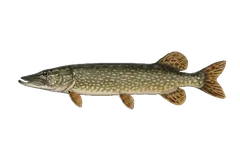
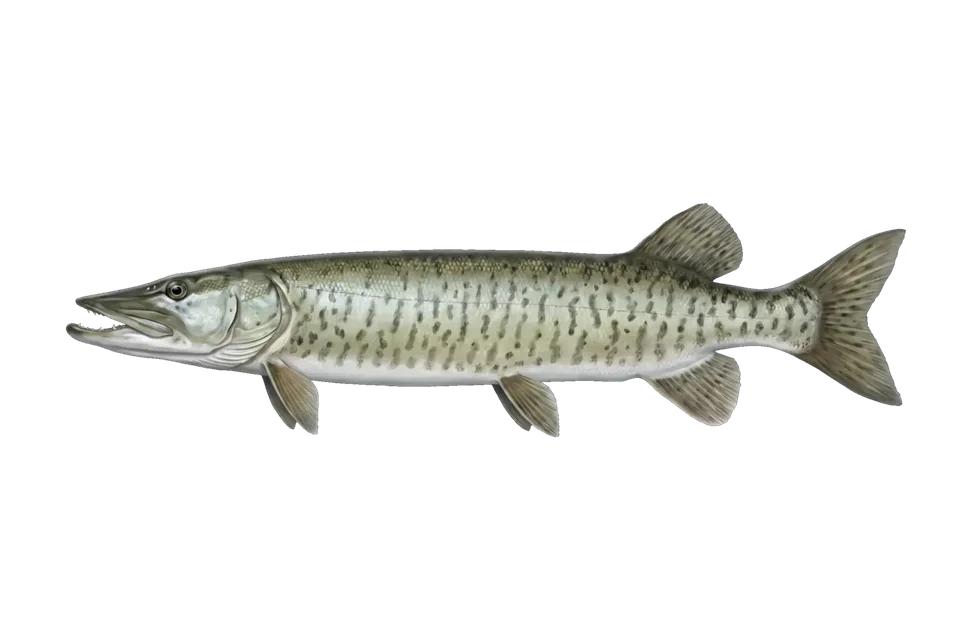
The muskellunge, or muskie, is the "fish of 10,000 casts": the largest member of the pike family, found in lakes and rivers of the Great Lakes region, the upper Midwest and Canada. They are rarely caught by accident, and most anglers release them.
Muskie water temperature
Muskie feed best at 72°F (22°C), active from about 61 to 81°F (16 to 27°C). That band comes from the same species model BiteCast scores with, and it is why the Fish Score for muskie rises and falls with the water rather than the air.
Fall, when the water cools through the 50s and 60s and big fish feed heavily before winter, is trophy season.
For a side-by-side view of every species, see the full water temperature table or the guide to reading water temperature.
When muskie bite
Low light is the best time: dawn, dusk and overcast days. Many anglers also time trips around weather changes, because a front moving in often triggers a short feeding spell.
Where to find muskie
Large cool lakes and big rivers, near weed edges and rock structure.
Weed edges, rock bars, points and the drop-offs next to deep water, especially where suckers, perch or ciscoes gather. In rivers, look at deep outside bends and eddies.
Best baits and lures for muskie
Ranked from BiteCast's bait data, with the colors to throw as the water gets dirtier. Natural baits show how to rig them instead of a color.
| # | Bait | Clear water | Stained | Muddy |
|---|---|---|---|---|
| 1 | Musky BucktailMetal and blades | Silver Blade/Black Body, Gold Blade/Brown Body, Black/Silver | Gold Blade/Orange Body, Firetiger, Black/Orange Double Willow | Solid Black, Chartreuse/Black, Silver Blade/Red Tail |
| 2 | Jointed SwimbaitHard bait | Perch, Rainbow Trout, Bluegill | Ghost Pink, Gold, Ayu | Matte Bone, Chartreuse/White, Black/Silver |
| 3 | PropbaitHard bait | Solid Black, Bone, Ghost Shad | Perch, Clown, Yellow Frog | Black/Orange, Firetiger, Solid White |
| 4 | SpinnerbaitMetal and blades | Black/Orange Double Willow, White Skirt with Silver Blades | White/Chartreuse Skirt with Gold/Silver Blades | Black & Blue Skirt with Gold Blade, Firetiger |
| 5 | Live MinnowNatural bait | Rig: Large baitfish (5+ in) | ||
| 6 | Casting SpoonMetal and blades | Chrome/Silver, Brass/Gold, Copper | Red & White, Blue/Silver, Yellow/Black | Fluorescent Pink, Chartreuse/Gold, Firetiger |
Big bucktails, jointed swimbaits, topwater propbaits and glide baits on heavy tackle with a wire or heavy fluorocarbon leader. Finish every retrieve with a figure-eight beside the boat, because muskie often follow a lure to the boat before they strike.
What muskie eat
In the wild muskie eat yellow perch, suckers, ciscoes, juvenile baitfish, frogs, crayfish. Matching the size and color of that forage is the single most reliable way to pick a bait.
About the muskellunge
The muskellunge is the largest member of the pike family, with an elongate body, a duck-bill snout, and dark markings on a lighter background (the reverse of northern pike).
It is native to north-central and eastern North America, including the Great Lakes, the Ohio and upper Mississippi basins, and the St Lawrence River, favouring clear weedy lakes and large rivers.
It is a solitary ambush predator that holds among vegetation or structure and strikes prey with a short explosive lunge, feeding most actively in low light.
Often called the fish of ten thousand casts because of its low catch rate, it can exceed 1.5 m and 30 kg, with the recognised record around 30 kg.
Found in: United States, Canada.
Common questions
What water temperature do muskie bite best in?
Muskie feed hardest around 72°F (22°C) and stay active from about 61 to 81°F (16 to 27°C). Below the band they slow down and feed less often; above it, warm water holds less oxygen and they go deeper or feed at night.
What time of day do muskie bite?
Muskie feed hardest in low light, around dawn and dusk, with a lull in the middle of a bright day. Cloud cover, stained water and wind chop stretch the low-light window through more of the day.
What is the best bait for muskie?
In BiteCast's bait rankings the top picks for muskie are musky bucktail, jointed swimbait, propbait. In clear water go natural (silver blade/black body, gold blade/brown body); in muddy water go dark or bright (solid black, chartreuse/black).