- Best water temperature
- 70°F21°C
- Active range
- 59 to 81°F15 to 27°C
- Feeds most
- Dawn and duskLow light
- Typical size
- 14 in35 cm
- Big ones reach
- 24 in12 lb
- Water
- FreshwaterStructure hugger
Smallmouth bass feed hardest in water around 70°F (21°C) and stay active from about 59 to 81°F. They feed hardest in low light, around dawn and dusk, with a lull in the middle of a bright day. Start with a tube jig in green pumpkin, a plastic worm in watermelon seed, a hair jig in black/smoke.
Smallmouth bass are the bronze-colored cousin of the largemouth: harder fighting pound for pound, fonder of clear water, rock and current, and native to the cooler rivers and lakes of the northern and eastern United States and Canada. They are the main bass in most northern lakes and in many of the best rivers in the country.
Smallmouth bass water temperature
Smallmouth bass feed best at 70°F (21°C), active from about 59 to 81°F (15 to 27°C). That band comes from the same species model BiteCast scores with, and it is why the Fish Score for smallmouth bass rises and falls with the water rather than the air.
Smallmouth want cooler water than largemouth. They start feeding hard as water warms through the 50s°F, spawn in the upper 50s to mid 60s, and feed best around 70°F. In the hottest part of summer they drop to deeper rock or hold in current, where the water carries more oxygen.
For a side-by-side view of every species, see the full water temperature table or the guide to reading water temperature.
When smallmouth bass bite
Early and late light are the prime windows, but smallmouth in clear lakes often feed well through the day when there is wind or cloud. In rivers the bite follows the current: stable or slightly dropping water after a rise is usually good, and a sudden muddy surge shuts it down.
Where to find smallmouth bass
Clear, cooler rocky lakes and rivers with current and gravel bottoms.
Look for rock: gravel points, boulder fields, rip-rap, ledges and humps in lakes, and the seams where fast water meets slow in rivers. They roam more than largemouth and often suspend near the edge of deep water where baitfish and crayfish are.
Best baits and lures for smallmouth bass
Ranked from BiteCast's bait data, with the colors to throw as the water gets dirtier. Natural baits show how to rig them instead of a color.
| # | Bait | Clear water | Stained | Muddy |
|---|---|---|---|---|
| 1 | Tube JigSoft plastic | Green Pumpkin, Goby Tan, Pearl White | Pumpkinseed/Gold Flake, Smoke Red | Black & Blue, Solid White, High-Vis Glow/Chartreuse |
| 2 | Plastic WormSoft plastic | Watermelon Seed, Green Pumpkin, Smoke Purple | Junebug, Pumpkinseed, Cinnamon | Black & Blue, Solid Black, Red Shad |
| 3 | Hair JigMetal and blades | Black/Smoke, Pure White, White/Silver | Yellow/Chartreuse, Pink/White, White/Red Head | Solid Black, Dark Purple, High-Vis Chartreuse |
| 4 | Skirted JigSoft plastic | Green Pumpkin, Watermelon Red, Peanut Butter & Jelly | Black & Blue, Green Pumpkin Orange, Red Craw | Black & Blue, Solid Black, Chartreuse/Black |
| 5 | Suspending JerkbaitHard bait | Pro Blue, Ghost Minnow, Tennessee Shad | Clown, Gold/Black, Table Rock Shad | Firetiger, Chartreuse Shad, Matte Bone |
| 6 | Inline SpinnerMetal and blades | Gold, Silver Blade/Black Body, Gold Blade/Brown Body | Gold Blade/Orange Body, Silver Blade/Red Tail, Rainbow Trout | Fluorescent Chartreuse, Hot Pink, Firetiger |
| 7 | Squarebill CrankbaitHard bait | Ghost Craw, Sexy Shad, Green Pumpkin Craw | Chartreuse/Black, Citrus Shad | Red Craw, Firetiger, Chartreuse/Blue |
| 8 | Soft StickbaitSoft plastic | Green Pumpkin, Watermelon Seed, Natural Blue | Junebug, Cinnamon Brown, Smoke Blue Flake | Black & Blue, Bubblegum Pink, Solid Black |
Crayfish-colored tubes, small jigs and finesse worms dragged along rock are the core. On windy days, a jerkbait or swimbait over rock flats draws the biggest fish. Go lighter and more natural than you would for largemouth, especially in clear water.
What smallmouth bass eat
In the wild smallmouth bass eat crayfish, juvenile baitfish, aquatic insects, minnows, hellgrammites, nymphs and larvae. Matching the size and color of that forage is the single most reliable way to pick a bait.
About the smallmouth bass
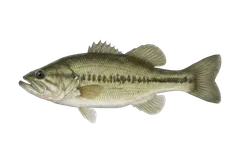
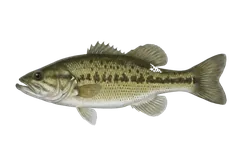
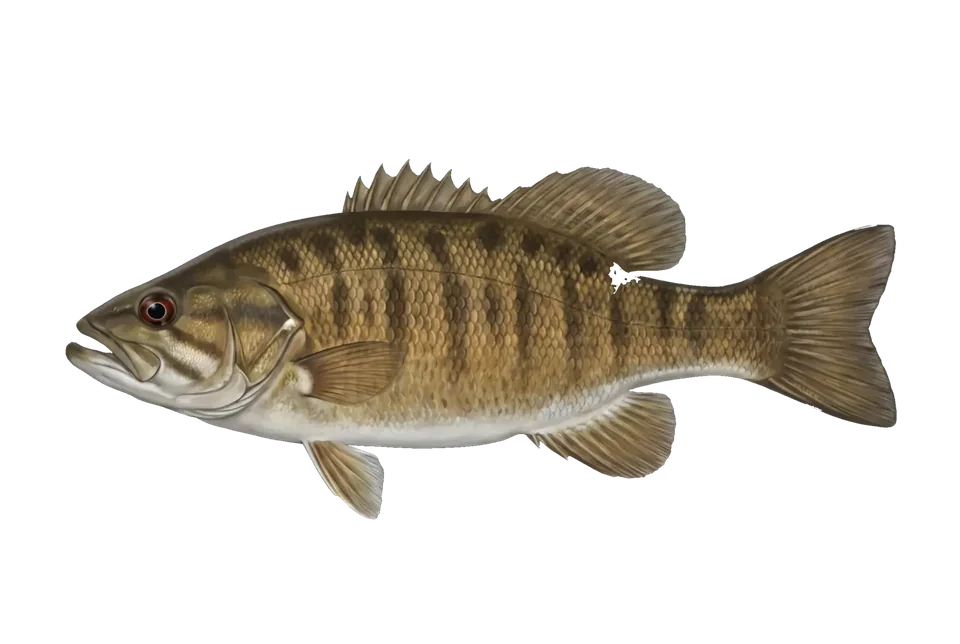
A bronze to brown freshwater black bass with dark vertical bars on the flanks and an upper jaw that does not extend past the eye, distinguishing it from largemouth bass.
Native to the upper and middle Mississippi basin, Great Lakes, and St. Lawrence drainages, it favours clear, cool, rocky rivers and lakes with gravel or boulder substrate.
It feeds actively in cooler water and ambushes prey around rocky cover, current breaks, and drop-offs, often relating closely to crayfish habitat.
Known for strong runs and repeated jumps when hooked, with the world record around 11 pounds 15 ounces taken in Tennessee in 1955.
Found in: United States, Canada, Japan, South Africa.
Common questions
What water temperature do smallmouth bass bite best in?
Smallmouth bass feed hardest around 70°F (21°C) and stay active from about 59 to 81°F (15 to 27°C). Below the band they slow down and feed less often; above it, warm water holds less oxygen and they go deeper or feed at night.
What time of day do smallmouth bass bite?
Smallmouth bass feed hardest in low light, around dawn and dusk, with a lull in the middle of a bright day. Cloud cover, stained water and wind chop stretch the low-light window through more of the day.
What is the best bait for smallmouth bass?
In BiteCast's bait rankings the top picks for smallmouth bass are tube jig, plastic worm, hair jig. In clear water go natural (green pumpkin, goby tan); in muddy water go dark or bright (black & blue, solid white).