- Best water temperature
- 52°F11°C
- Active range
- 41 to 59°F5 to 15°C
- Feeds most
- Daytime
- Typical size
- 24 in60 cm
- Big ones reach
- 59 in71 lb
- Water
- FreshwaterBottom dweller
Lake trout feed hardest in water around 52°F (11°C) and stay active from about 41 to 59°F. They are daytime feeders: activity builds through the morning and holds through the brighter hours. Start with a casting spoon in chrome silver, a trolling plug in purple haze, a tube jig in pearl white.
The lake trout is a big, long-lived char of deep, cold lakes across Canada, the Great Lakes, New England and the Rocky Mountain West. It spends summer far below the surface and is one of the most reliable fish to catch through the ice.
Lake trout water temperature
Lake trout feed best at 52°F (11°C), active from about 41 to 59°F (5 to 15°C). That band comes from the same species model BiteCast scores with, and it is why the Fish Score for lake trout rises and falls with the water rather than the air.
Lake trout want the coldest water of any common gamefish. Right after ice-out and again in late fall they cruise the shallows; once the surface warms in summer they drop below the thermocline, often 50 to 100 feet down.
For a side-by-side view of every species, see the full water temperature table or the guide to reading water temperature.
When lake trout bite
Lake trout feed through the day more than most trout, especially in deep water where light matters less. Early and late in the day are best when they are shallow in spring and fall.
Where to find lake trout
Cold, deep, well-oxygenated lakes of northern North America.
Rocky points, reefs, humps and steep drop-offs next to deep basins. In summer, find the depth where cold water starts and look for suspended baitfish at that depth.
Best baits and lures for lake trout
Ranked from BiteCast's bait data, with the colors to throw as the water gets dirtier. Natural baits show how to rig them instead of a color.
| # | Bait | Clear water | Stained | Muddy |
|---|---|---|---|---|
| 1 | Casting SpoonMetal and blades | Chrome Silver, Brass/Gold, Copper | Red & White, Blue/Silver, Yellow/Black | Fluorescent Pink, Chartreuse/Gold, Firetiger |
| 2 | Trolling PlugHard bait | Purple Haze, Wonderbread, Silver/Blue | ||
| 3 | Tube JigSoft plastic | Pearl White, Green Pumpkin, Goby Tan | Pumpkinseed/Gold Flake, Smoke Red | Black & Blue, Solid White, High-Vis Glow/Chartreuse |
| 4 | Vertical Metal JigMetal and blades | Glow Silver, Chrome Silver, Blue/Silver | Glow Zebra, UV Pink, Chartreuse/Gold | Luminous Glow Green, UV Orange |
| 5 | Cut Fish ChunkNatural bait | Rig: Fresh chunk | ||
Trolling spoons and plugs at the right depth covers water fast. Vertical jigging with tubes and heavy metal jigs over structure is deadly once you find fish on sonar. Through the ice, tube jigs and flashy spoons tipped with bait.
What lake trout eat
In the wild lake trout eat lake fish such as cisco and smelt, sculpins, small whitefish, crustaceans, insects, fish fry. Matching the size and color of that forage is the single most reliable way to pick a bait.
About the lake trout
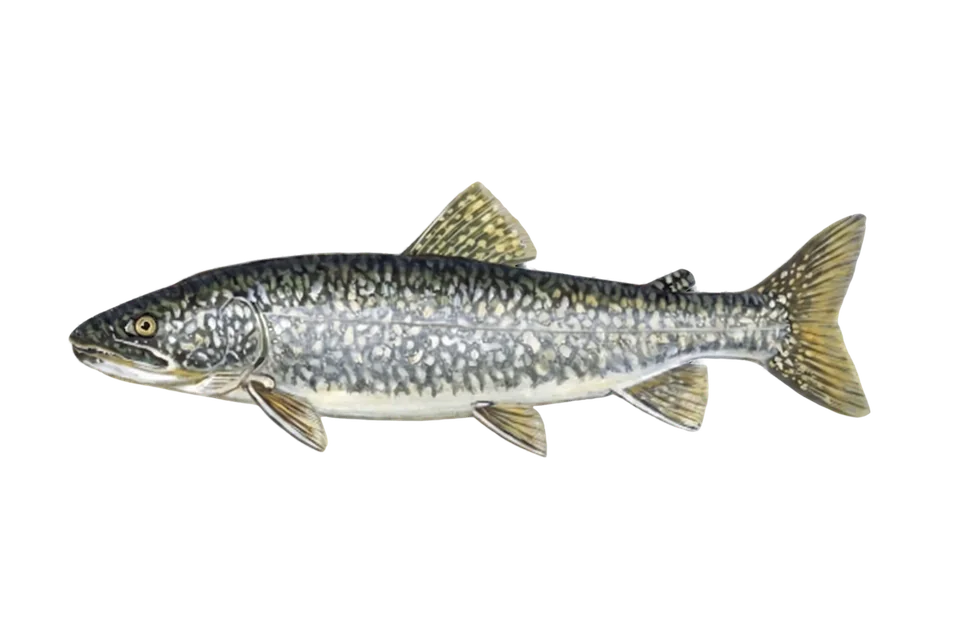
The lake trout is a large, deep-cold-water char with a deeply forked tail and pale cream spots scattered over a grey-green body.
It lives in cold, deep, clean lakes of northern North America and retreats to deep, cold layers through the warm months.
Slow-growing and long-lived, it can reach great size and age in the right water, supporting prized trophy fisheries.
Anglers reach it by deep trolling and vertical jigging in summer, or in the shallows soon after ice-out when it feeds near the surface.
Found in: United States, Canada, Switzerland, France, Norway, Sweden.
Common questions
What water temperature do lake trout bite best in?
Lake trout feed hardest around 52°F (11°C) and stay active from about 41 to 59°F (5 to 15°C). Below the band they slow down and feed less often; above it, warm water holds less oxygen and they go deeper or feed at night.
What time of day do lake trout bite?
Lake trout are daytime feeders: activity builds through the morning and holds through the brighter hours. Cloud cover, stained water and wind chop stretch the low-light window through more of the day.
What is the best bait for lake trout?
In BiteCast's bait rankings the top picks for lake trout are casting spoon, trolling plug, tube jig. In clear water go natural (chrome silver, brass/gold); in muddy water go dark or bright (fluorescent pink, chartreuse/gold).