- Best water temperature
- 59°F15°C
- Active range
- 50 to 68°F10 to 20°C
- Feeds most
- Dawn and duskLow light
- Typical size
- 14 in35 cm
- Big ones reach
- 30 in20 lb
- Water
- FreshwaterCool-water cruiser
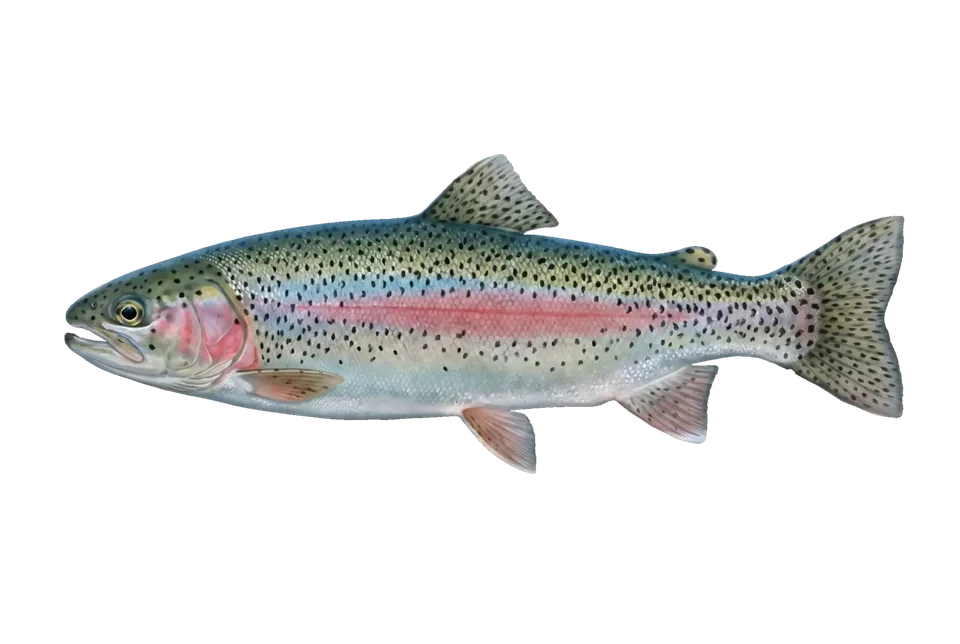
Rainbow trout feed hardest in water around 59°F (15°C) and stay active from about 50 to 68°F. They feed hardest in low light, around dawn and dusk, with a lull in the middle of a bright day. Start with an inline spinner in gold/rainbow trout, salmon roe (single egg), floating paste.
The rainbow trout is the most widely stocked gamefish in North America: in mountain streams, tailwaters, and thousands of lakes and ponds stocked every spring and fall. It needs cold, clean water, and its bite follows the temperature closely.
Rainbow trout water temperature
Rainbow trout feed best at 59°F (15°C), active from about 50 to 68°F (10 to 20°C). That band comes from the same species model BiteCast scores with, and it is why the Fish Score for rainbow trout rises and falls with the water rather than the air.
Above 68°F rainbows become stressed and feed less, so in summer the fishing is best early, in spring-fed and tailwater rivers, and deeper in lakes. Many anglers stop fishing for trout when the water passes 70°F to avoid killing released fish.
For a side-by-side view of every species, see the full water temperature table or the guide to reading water temperature.
When rainbow trout bite
Dawn and dusk are prime, especially in summer. Overcast days and a hatch of insects bring them up through the day. Freshly stocked fish bite almost any time.
Where to find rainbow trout
Cold, oxygen-rich streams, rivers and lakes; widely stocked worldwide.
In streams, seams where fast water meets slow, the heads and tails of pools, and behind rocks. In lakes, near inflows, along drop-offs, and in cooler deeper water as it warms.
Best baits and lures for rainbow trout
Ranked from BiteCast's bait data, with the colors to throw as the water gets dirtier. Natural baits show how to rig them instead of a color.
| # | Bait | Clear water | Stained | Muddy |
|---|---|---|---|---|
| 1 | Inline SpinnerMetal and blades | Gold/Rainbow Trout, Silver Blade/Black Body, Gold Blade/Brown Body | Gold Blade/Orange Body, Silver Blade/Red Tail, Rainbow Trout | Fluorescent Chartreuse, Hot Pink, Firetiger |
| 2 | Salmon RoeNatural bait | Rig: Single egg | ||
| 3 | Paste BaitNatural bait | Rig: Floating paste | ||
| 4 | EarthwormNatural bait | Rig: Cut section | ||
| 5 | Casting SpoonMetal and blades | Silver/Blue, Chrome/Silver, Brass/Gold | Red & White, Blue/Silver, Yellow/Black | Fluorescent Pink, Chartreuse/Gold, Firetiger |
| 6 | Suspending JerkbaitHard bait | Pro Blue, Ghost Minnow, Tennessee Shad | Clown, Gold/Black, Table Rock Shad | Firetiger, Chartreuse Shad, Matte Bone |
Small inline spinners, salmon eggs, paste baits under a float, nightcrawlers drifted along the bottom, and flies. Use light line in clear water.
What rainbow trout eat
In the wild rainbow trout eat aquatic insect larvae, adult flying insects, freshwater shrimp, small crustaceans, fish eggs, juvenile baitfish. Matching the size and color of that forage is the single most reliable way to pick a bait.
About the rainbow trout
A medium-sized salmonid identified by a broad pinkish-red lateral stripe, heavily black-spotted body and tail, and a squarish, slightly forked tail.
Native to cold, clear streams and lakes of the Pacific drainage of North America and northeast Asia, but now stocked widely across six continents.
An opportunistic drift feeder that takes insects from the surface and water column, shifting to fish and crustaceans as it grows larger.
Known for an acrobatic, leaping fight; the steelhead form is sea-run, and rod-caught fish have exceeded 20 kilograms.
Found in: United States, Andorra, Argentina, Austria, Australia, Bosnia & Herzegovina, Belgium, Brazil, Canada, Switzerland, Chile, China, Colombia, Costa Rica, Cyprus, Czechia, Germany, Denmark, Ecuador, Spain, Finland, France, United Kingdom, Greece, Ireland, Iran, Italy, Japan, South Korea, Liechtenstein, Lesotho, Luxembourg, Mexico, Netherlands, Norway, New Zealand, Panama, Peru, Poland, Portugal, Réunion, Serbia, Russia, Sweden, Slovenia, French Southern Territories, Türkiye, South Africa.
Common questions
What water temperature do rainbow trout bite best in?
Rainbow trout feed hardest around 59°F (15°C) and stay active from about 50 to 68°F (10 to 20°C). Below the band they slow down and feed less often; above it, warm water holds less oxygen and they go deeper or feed at night.
What time of day do rainbow trout bite?
Rainbow trout feed hardest in low light, around dawn and dusk, with a lull in the middle of a bright day. Cloud cover, stained water and wind chop stretch the low-light window through more of the day.
What is the best bait for rainbow trout?
In BiteCast's bait rankings the top picks for rainbow trout are inline spinner, salmon roe, paste bait. In clear water go natural (gold/rainbow trout, silver blade/black body); in muddy water go dark or bright (fluorescent chartreuse, hot pink).