- Best water temperature
- 81°F27°C
- Active range
- 73 to 91°F23 to 33°C
- Feeds most
- Dawn and duskLow light
- Typical size
- 26 in65 cm
- Big ones reach
- 55 in55 lb
- Water
- SaltwaterStructure ambusher
Snook feed hardest in water around 81°F (27°C) and stay active from about 73 to 91°F. They feed hardest in low light, around dawn and dusk, with a lull in the middle of a bright day. Start with a medium minnow (3 to 4 in), a paddle-tail swimbait in pearl white, a soft jerk shad in smelt.
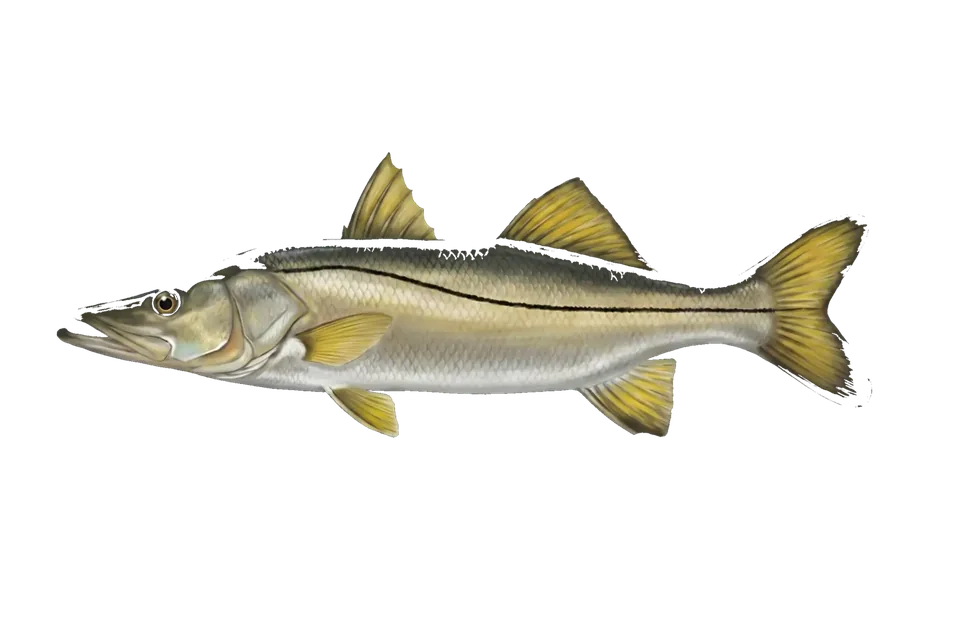
The common snook is Florida's premier inshore gamefish: a hard-striking ambush predator of mangroves, docks, passes and beaches, marked by a black stripe down its side. It is managed with seasons and a slot limit, so check current rules before keeping one.
Snook water temperature
Snook feed best at 81°F (27°C), active from about 73 to 91°F (23 to 33°C). That band comes from the same species model BiteCast scores with, and it is why the Fish Score for snook rises and falls with the water rather than the air.
Snook are tropical fish, and they cannot handle cold: when the water falls below the 60s they retreat to rivers, canals and deep holes, and a hard freeze can kill them.
For a side-by-side view of every species, see the full water temperature table or the guide to reading water temperature.
When snook bite
Snook are low-light hunters. Dawn and dusk are prime, and lighted docks and bridges after dark are a classic snook pattern. Moving tide, especially a strong outgoing tide at a pass or mangrove point, sets them feeding.
Where to find snook
Mangroves, passes, docks and beaches of Florida and the tropical Atlantic.
Mangrove shorelines, dock pilings, bridges, jetties, inlets and passes, and the beach trough in summer. They hold facing into the current and wait for bait to be swept past.
Best baits and lures for snook
Ranked from BiteCast's bait data, with the colors to throw as the water gets dirtier. Natural baits show how to rig them instead of a color.
| # | Bait | Clear water | Stained | Muddy |
|---|---|---|---|---|
| 1 | Live MinnowNatural bait | Rig: Medium minnow (3 to 4 in) | ||
| 2 | Paddle-Tail SwimbaitSoft plastic | Pearl White, Ayu, Ghost Shad | Chartreuse, Electric Chicken, Sexy Shad | White/Chartreuse, Solid Black, Hot Pink |
| 3 | Soft Jerk ShadSoft plastic | Smelt, Pearl White, Arkansas Shad | Houdini, Baby Bass, Pink/Silver | Chartreuse, White/Red Head, Solid Black |
| 4 | Topwater PopperHard bait | Bone, Clear Silver, Ghost Shad | Chrome/Blue, Chartreuse/White, Yellow Perch | Solid Black, Firetiger, Dark Violet |
| 5 | Suspending JerkbaitHard bait | Pro Blue, Ghost Minnow, Tennessee Shad | Clown, Gold/Black, Table Rock Shad | Firetiger, Chartreuse Shad, Matte Bone |
| 6 | Hair JigMetal and blades | Pure White, White/Silver, Brown/White | White/Red Head, Yellow/Chartreuse, Pink/White | Solid Black, Dark Purple, High-Vis Chartreuse |
| 7 | Jointed SwimbaitHard bait | Rainbow Trout, Bluegill, Shad | Ghost Pink, Gold, Ayu | Matte Bone, Chartreuse/White, Black/Silver |
| 8 | Raw ShrimpNatural bait | Rig: Whole shrimp | ||
Live pilchards, pinfish and shrimp free-lined or under a float are hard to beat. Paddle-tail swimbaits, soft jerk shads and topwater plugs at first light catch big fish. Use a heavy leader: snook have a sharp gill plate that cuts light line.
What snook eat
In the wild snook eat pinfish, mullet, pilchards, menhaden, shrimp, crabs. Matching the size and color of that forage is the single most reliable way to pick a bait.
About the common snook
The common snook is a silvery, elongated fish identified by a sharp black lateral line running from gill to tail and a sloping forehead with a protruding lower jaw.
It inhabits coastal and estuarine waters of the western Atlantic from Florida through the Gulf of Mexico to Brazil, favouring mangroves, beaches, passes, and river mouths.
It is a cold-sensitive, euryhaline ambush predator that moves between fresh and salt water and stages near passes and inlets to spawn in summer.
It fights hard with strong runs toward structure, and the all-tackle record is roughly 24 kg, with most caught fish measuring 50 to 90 cm.
Found in: United States, Brazil, Belize, Colombia, Costa Rica, Cuba, French Guiana, Honduras, Mexico, Panama, Puerto Rico, Trinidad & Tobago, Venezuela.
Common questions
What water temperature do snook bite best in?
Snook feed hardest around 81°F (27°C) and stay active from about 73 to 91°F (23 to 33°C). Below the band they slow down and feed less often; above it, warm water holds less oxygen and they go deeper or feed at night.
What time of day do snook bite?
Snook feed hardest in low light, around dawn and dusk, with a lull in the middle of a bright day. Cloud cover, stained water and wind chop stretch the low-light window through more of the day.
What is the best bait for snook?
In BiteCast's bait rankings the top picks for snook are live minnow, paddle-tail swimbait, soft jerk shad.