- Best water temperature
- 64°F18°C
- Active range
- 54 to 73°F12 to 23°C
- Feeds most
- Dawn and duskLow light
- Typical size
- 28 in70 cm
- Big ones reach
- 79 in126 lb
- Water
- Fresh and saltMigratory surf and estuary hunter
Striped bass feed hardest in water around 64°F (18°C) and stay active from about 54 to 73°F. They feed hardest in low light, around dawn and dusk, with a lull in the middle of a bright day. Start with a topwater popper in bone, a whole live eel, a fresh chunk of cut fish.
Striped bass, or stripers, are big, migratory predators of the Atlantic coast from the Carolinas to Maine, of the Pacific coast around San Francisco Bay, and of dozens of inland reservoirs where they are stocked. Wherever they live, they follow the baitfish.
Striped bass water temperature
Striped bass feed best at 64°F (18°C), active from about 54 to 73°F (12 to 23°C). That band comes from the same species model BiteCast scores with, and it is why the Fish Score for striped bass rises and falls with the water rather than the air.
Stripers prefer cool water. They feed best in the low to mid 60s°F and stay active from the mid 50s into the low 70s. On the coast they move north in spring and south in fall with that band. In reservoirs, summer heat pushes them deep, to the coolest water that still carries enough oxygen.
For a side-by-side view of every species, see the full water temperature table or the guide to reading water temperature.
When striped bass bite
Dawn, dusk and night are prime. Tide matters on the coast: moving water around inlets, points and bridges concentrates bait and sets off feeding. At night, big stripers hunt the shallows.
Where to find striped bass
Atlantic coast surf, estuaries and rivers; migratory and tide-driven.
On the coast: surf beaches, inlets, bridges, rips and estuary mouths, wherever bunker, herring or sand eels gather. In reservoirs: points, river channels and the dam, following schools of shad.
Best baits and lures for striped bass
Ranked from BiteCast's bait data, with the colors to throw as the water gets dirtier. Natural baits show how to rig them instead of a color.
| # | Bait | Clear water | Stained | Muddy |
|---|---|---|---|---|
| 1 | Topwater PopperHard bait | Bone, Clear Silver, Ghost Shad | Chrome/Blue, Chartreuse/White, Yellow Perch | Solid Black, Firetiger, Dark Violet |
| 2 | Live EelNatural bait | Rig: Whole live eel | ||
| 3 | Cut Fish ChunkNatural bait | Rig: Fresh chunk | ||
| 4 | Paddle-Tail SwimbaitSoft plastic | Pearl White, Ayu, Ghost Shad | Chartreuse, Electric Chicken, Sexy Shad | White/Chartreuse, Solid Black, Hot Pink |
| 5 | Soft Jerk ShadSoft plastic | Arkansas Shad, Pearl White, Smelt | Houdini, Baby Bass, Pink/Silver | Chartreuse, White/Red Head, Solid Black |
| 6 | Hair JigMetal and blades | Pure White, White/Silver, Brown/White | Yellow/Chartreuse, Pink/White, White/Red Head | Solid Black, Dark Purple, High-Vis Chartreuse |
| 7 | Suspending JerkbaitHard bait | Pro Blue, Ghost Minnow, Tennessee Shad | Clown, Gold/Black, Table Rock Shad | Firetiger, Chartreuse Shad, Matte Bone |
| 8 | Walking StickbaitHard bait | Chrome Silver, Bone, Ghost Clear | Pink/Silver, Mullet, Chartreuse Back | Solid Black, Black/Purple, Pearl White |
Topwater plugs at first light, soft swimbaits and bucktails in current, live eels at night, and cut bunker on the bottom. Match the size of the local bait.
What striped bass eat
In the wild striped bass eat menhaden, herring, alewife, juvenile baitfish, blue crabs, shrimp. Matching the size and color of that forage is the single most reliable way to pick a bait.
About the striped bass
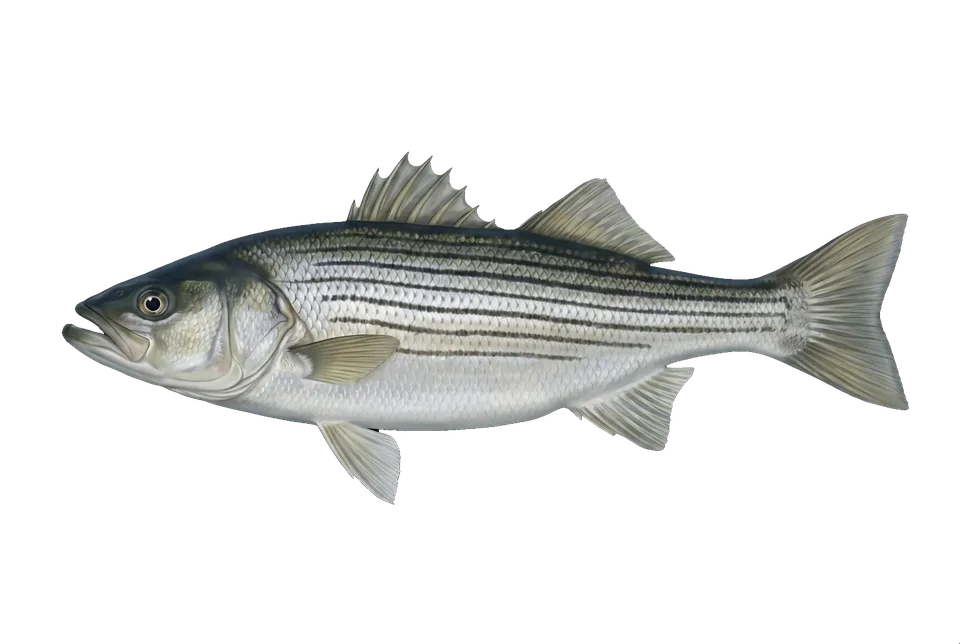
A silvery, large-bodied fish identified by 7 to 8 dark horizontal stripes running along its sides above and below the lateral line.
Native to the Atlantic coast of North America, it is anadromous, living in coastal salt water and spawning in fresh tidal rivers, with landlocked freshwater populations also established.
It is a schooling, opportunistic predator that often herds and ambushes baitfish, feeding most actively at dawn, dusk, and during tide changes.
Strong fighters known for powerful runs, they commonly reach 5 to 20 kilograms, with the all-tackle record at about 36 kilograms taken off Connecticut.
Found in: United States, Canada, Mexico.
Common questions
What water temperature do striped bass bite best in?
Striped bass feed hardest around 64°F (18°C) and stay active from about 54 to 73°F (12 to 23°C). Below the band they slow down and feed less often; above it, warm water holds less oxygen and they go deeper or feed at night.
What time of day do striped bass bite?
Striped bass feed hardest in low light, around dawn and dusk, with a lull in the middle of a bright day. Cloud cover, stained water and wind chop stretch the low-light window through more of the day.
What is the best bait for striped bass?
In BiteCast's bait rankings the top picks for striped bass are topwater popper, live eel, cut fish chunk. In clear water go natural (bone, clear silver); in muddy water go dark or bright (solid black, firetiger).