- Best water temperature
- 81°F27°C
- Active range
- 73 to 90°F23 to 32°C
- Feeds most
- Dawn and duskLow light
- Typical size
- 59 in150 cm
- Big ones reach
- 98 in353 lb
- Water
- SaltwaterMid-water roamer
Tarpon feed hardest in water around 81°F (27°C) and stay active from about 73 to 90°F. They feed hardest in low light, around dawn and dusk, with a lull in the middle of a bright day. Start with a large live baitfish (5+ in), a whole crab, a soft jerk shad in pearl white.
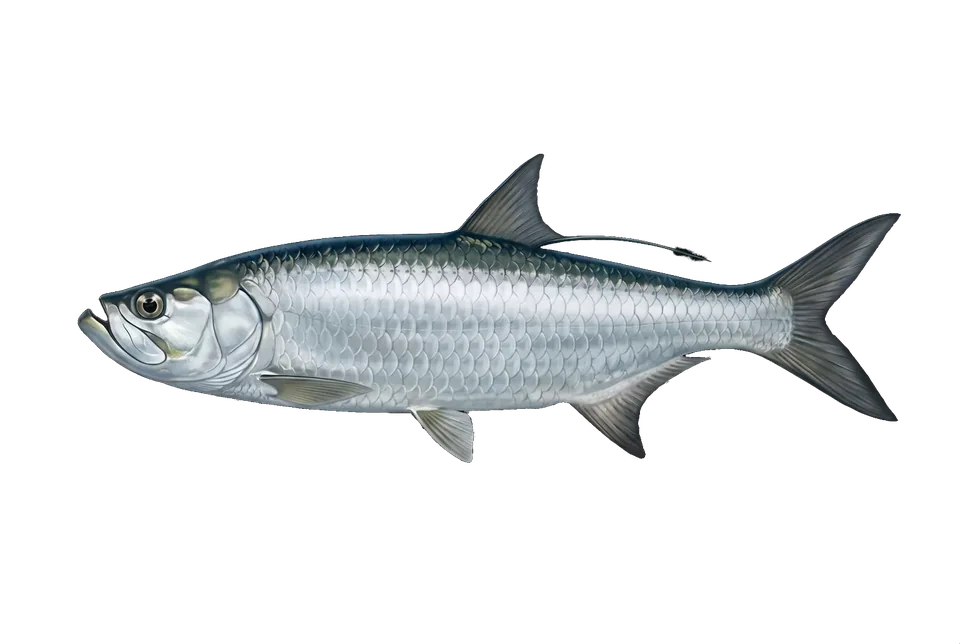
The tarpon, or silver king, is the great jumping fish of the Gulf and southern Atlantic coasts: often over 100 pounds, armored in huge silver scales, and famous for leaping clear of the water when hooked. Almost all tarpon are released.
Tarpon water temperature
Tarpon feed best at 81°F (27°C), active from about 73 to 90°F (23 to 32°C). That band comes from the same species model BiteCast scores with, and it is why the Fish Score for tarpon rises and falls with the water rather than the air.
Tarpon follow warm water: the spring and summer migration along Florida and the Gulf Coast, with Boca Grande and the Florida Keys at its heart, runs as the water warms into the upper 70s.
For a side-by-side view of every species, see the full water temperature table or the guide to reading water temperature.
When tarpon bite
Low light is best: dawn, dusk and night. Tide is critical in passes and around bridges, where tarpon feed on crabs and baitfish swept by the current, often at night on a strong outgoing tide.
Where to find tarpon
Warm coastal waters, passes and estuaries of the Atlantic; juveniles enter brackish and fresh water.
Passes, inlets, bridges, beaches and channel edges during the migration; backcountry rivers and canals for smaller fish year round.
Best baits and lures for tarpon
Ranked from BiteCast's bait data, with the colors to throw as the water gets dirtier. Natural baits show how to rig them instead of a color.
| # | Bait | Clear water | Stained | Muddy |
|---|---|---|---|---|
| 1 | Live MinnowNatural bait | Rig: Large baitfish (5+ in) | ||
| 2 | Live CrabNatural bait | Rig: Whole crab | ||
| 3 | Soft Jerk ShadSoft plastic | Pearl White, Arkansas Shad, Smelt | Houdini, Baby Bass, Pink/Silver | Chartreuse, White/Red Head, Solid Black |
| 4 | Topwater PopperHard bait | Bone, Clear Silver, Ghost Shad | Chrome/Blue, Chartreuse/White, Yellow Perch | Solid Black, Firetiger, Dark Violet |
| 5 | Jointed SwimbaitHard bait | Shad, Rainbow Trout, Bluegill | Ghost Pink, Gold, Ayu | Matte Bone, Chartreuse/White, Black/Silver |
| 6 | Hair JigMetal and blades | Pure White, White/Silver, Brown/White | Yellow/Chartreuse, Pink/White, White/Red Head | Solid Black, Dark Purple, High-Vis Chartreuse |
| 7 | Raw ShrimpNatural bait | Rig: Whole shrimp | ||
| 8 | Walking StickbaitHard bait | Bone, Ghost Clear, Chrome Silver | Pink/Silver, Mullet, Chartreuse Back | Solid Black, Black/Purple, Pearl White |
Live crabs, mullet, pinfish and threadfin herring drifted in the current, soft jerk shads and swimbaits, and topwater plugs. Use a heavy leader and "bow" to the fish when it jumps, dropping the rod tip to keep the hook from pulling.
What tarpon eat
In the wild tarpon eat mullet and other fish, crabs, shrimp, baitfish shoals. Matching the size and color of that forage is the single most reliable way to pick a bait.
About the tarpon
The tarpon is a giant, prehistoric-looking fish clad in huge silver scales, able to gulp air at the surface to survive low-oxygen water.
It ranges through warm Atlantic coastal waters, passes and estuaries, with juveniles tolerating brackish and fresh backwaters.
Hooked tarpon erupt in spectacular leaps and unstoppable runs, making them one of the most coveted shallow-water gamefish in the world.
It is almost always released and is most often fished purely for sport, handled in the water wherever possible.
Found in: United States, Benin, Caribbean Netherlands, Brazil, Belize, Colombia, Cuba, French Guiana, Guadeloupe, Honduras, Cayman Islands, Mexico, Puerto Rico, Venezuela, British Virgin Islands, U.S. Virgin Islands.
Common questions
What water temperature do tarpon bite best in?
Tarpon feed hardest around 81°F (27°C) and stay active from about 73 to 90°F (23 to 32°C). Below the band they slow down and feed less often; above it, warm water holds less oxygen and they go deeper or feed at night.
What time of day do tarpon bite?
Tarpon feed hardest in low light, around dawn and dusk, with a lull in the middle of a bright day. Cloud cover, stained water and wind chop stretch the low-light window through more of the day.
What is the best bait for tarpon?
In BiteCast's bait rankings the top picks for tarpon are live minnow, live crab, soft jerk shad.